Have you ever had an injury that makes you question what you did to deserve the pain?
I have an ear ache that even though there’s a pretty clear reason for why I have it, there’s something that feels more “spiritual” about it. Like, it can’t just be an ear ache. There must be a message.
Maybe I’m not listening to my spirit guides.
What am I missing? I’m curious about how I can listen better.
Somehow, it brings me to one of my core hurts: feeling ignored, not being heard or seen.
This is actually a big piece of the work I’ve been doing emotionally the last few years, particularly because becoming pregnant and being a mother can be invisibilizing. People will say some insensitive things to you while you’re pregnant (rarely, if ever, out of malice in my experience) and they’ll surely be so gaga over the baby that you can fade into the background at tender times.
Every child is deserving of all the unconditional love! I’m not suggesting otherwise. Let’s always be gaga over the children AND let’s get gooey for the mamas, too.
Postpartum healing is a physical, emotional, and metaphysical transformation that will effect birthing bodies for the rest of their lives. And, in a society and culture where biologically women are diagnosed at an alarming rate above men for mental health disorders, cancers, and more this should be a concern for everyone.
The caregivers of the world need some extra thoughts, love, and supportive action. Particularly in the chrysalis of pregnancy where the liminal space of life and death converge and on through the postpartum years of emergent motherhood. Postpartum care is a formative time where a village is truly needed.
While the transformation is beautiful and at times very hard, you can imagine how everything around a mother changes. Even relationships. Sometimes in ways we don’t like.
What I try to remember is that we are all always changing and so is everything around us. Things continue to shift and nothing is static, which gives me hope when things are hard. It’s the both/and.
My work around core wounds has included understanding and embodying my needs and boundaries, and learning how to communicate them, in the moment.
Circumstances will change. And in the process, I will work on how I live and respond authentically.
Let me tell you, I still have SO much growth in the land of communicating authentically “on time”. Hi, it’s me, still working on being good at conflict, even when it’s small conflict. My child helps me practice because that’s mama bear and how she functions. It can be easier to hold ground when you do so to protect someone else.
I want to be more gently assertive for myself. I want to say in the moment that I feel left out or not considered or disrespected or need some extra help or a witness or an ear or a shoulder to cry on. That I would accept the help but like this, or not today, but ask again tomorrow. I want to and I often don’t. The moment passes. And sometimes it feels like thoughtful reflection is enough.
Unfortunately, if the moment passes too many times on something tender it can start to feel like a bruise getting poked and then small things get overinflated. I think I’ll be over something and then POW right back to the reactivity.
Or when I do have the courage to speak up in the moment and state a boundary, I can receive reactive, emotional responses from the person I’ve communicated the boundary to. It can often be subtle, quiet, energetic reactions that are felt all the same. The simmer, the seethe, the smoke.
A boundary request stated can begin to feel like an impassable wall.
And that’s the nature of boundaries. Typically, they aren’t what the other party wants, otherwise you wouldn’t have to ask for them. Sometimes, if we are good at discomfort and conflict, we can compromise well. This is what you can hope and work for–building bridges of understanding.
Also, what does a boundary look like intra-personally? From myself, for myself. With bad habits like scratching an itch or mindlessly nail-biting or consuming sweets. It’s not that it’s never okay, but when do I take it too far? Where’s that edge?
For a pain-adverse culture, we sure aren’t that good at preventing or avoiding it, which is a losing game, anyhow. What you don’t deal with catches up with you one way or the other.
Any moment that pain pokes its head in to our lives, whether physical or emotional, is an opportunity to connect.
Even a short, somatic-based movement session can help me find insight through embodiment. Often, the simple, slow, connective, and forgiving space of being with and in the body for a few moments offers a reprieve from the conceptualized stressors of day-to-day life.
Embodiment practices can work as preventative medicine.
Sit quietly. Breathe. Notice what you notice.
That can be enough. To have no answer, to just be curious. Some times, it’s just what is. An ear ache. A difficult exchange. A tender moment. A huge transition. It’ll pass and something new will arrive.
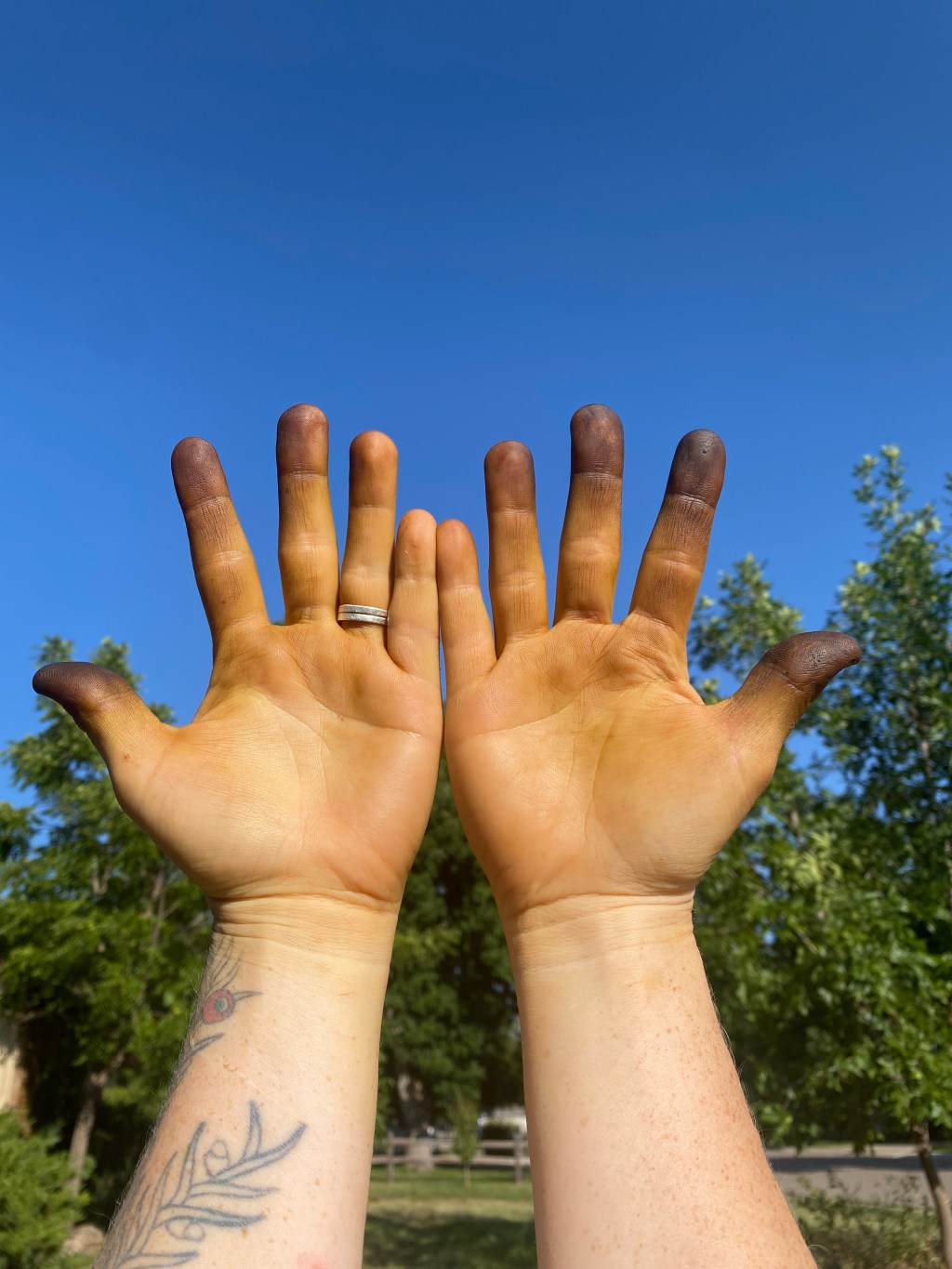
 Ephemeral Movement